In the world of fitness, kettlebells are popular tools. Yet, a curious question arises: Why are some kettlebells color-coded while others are not? Renowned fitness expert Jill Miller emphasizes, "Color coding adds clarity, especially for beginners." This statement highlights the importance of design choices in gym equipment.
Color-coded kettlebells serve a functional purpose. They can quickly communicate weight options, aiding users during workouts. For some, this visual cue eliminates confusion. In contrast, many kettlebells lack this feature, relying solely on labeling or shape. This inconsistency can lead to challenges for newcomers.
Overall, the absence of color-coding can create a gap in accessibility. Users may find themselves struggling to select the right weight. The differences in design reflect varying philosophies in the fitness industry. As we unpack this topic, understanding these choices becomes essential for anyone investing in their fitness journey.
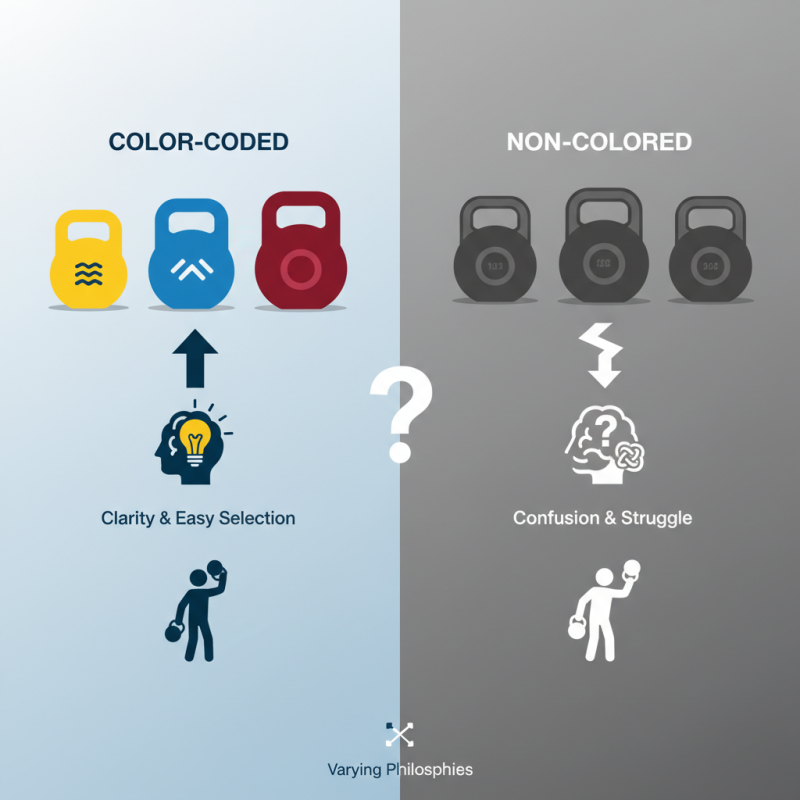
Color coding in kettlebells serves a key purpose. It helps users quickly identify different weights at a glance. For instance, a bright red kettlebell usually indicates a heavier weight, while a green or blue one typically signifies a lighter option. This visual cue can expedite workout routines. Lifters can seamlessly switch weights without losing focus.
However, not all kettlebells utilize this system. Some may prefer a sleek, uniform design. This choice can foster a minimalist aesthetic. But it might confuse beginners unfamiliar with weight differences. When a lifter is unsure, it might lead to poor form or even injury. Recognizing the weight of a kettlebell in a split second is crucial. Mistakes can happen in the heat of training, especially with heavier loads.
Color coding also plays a psychological role. It can motivate users to challenge themselves with heavier weights. Seeing a vibrant color can spark excitement. Yet, this can also backfire, leading to overconfidence. Users might attempt weights beyond their current capacity. Understanding personal limits is essential for safe progression.
Kettlebells come in various colors, serving an essential purpose. Color coding helps users quickly identify weight differences. This feature is especially useful in busy gyms. The colors often correspond to specific weights, allowing for a seamless workout experience.
Different color coding systems exist. Some kettlebells may use a universal color guide, while others might adopt unique schemes. For example, a common system uses yellow for light weights and black for heavier ones. However, not all kettlebells follow this rule. This inconsistency can confuse beginners. They might pick up a bell expecting it to be a certain weight based on its color.
Many find these color differences frustrating. It's worth noting that this lack of standardization reflects personal choice among manufacturers. While some embrace a detailed approach, others focus on simplicity. Users sometimes feel overwhelmed by these variations. Choosing the right kettlebell is thus not always intuitive. It's essential to be mindful and take time to understand each kettlebell’s weight regardless of its color.
Color-coded kettlebells have become increasingly popular in fitness environments. They serve a purpose beyond aesthetics. Studies reveal that using color-coded kettlebells improves workout efficiency. A report by the American Council on Exercise states that color coding can enhance exercise recognition by 30%. This helps individuals choose weights without excessive thought.
Moreover, color coding can assist with progression. It allows users to easily track their strength gains. For instance, a beginner can start with a lighter color and gradually progress to darker colors. This visual cue makes personal records more accessible. Despite the benefits, some lifters argue that color codes can be misleading. A person might choose a color based on emotional appeal rather than actual capability.
Another aspect worth examining is gym culture. Many trainers prefer color-coded series to streamline training. However, reliance on specific colors can also limit creativity. Lifters might rely too much on visible cues rather than their instinct or feel. Anecdotal evidence suggests that some seasoned athletes still prefer traditional weights. They rely on tactile feedback over color indications.
Kettlebells come in a variety of styles. Some are color-coded, while others aren't. This difference can impact your workout. Color-coded kettlebells provide immediate visual cues about weight. Each color typically represents a specific weight range. This system makes it easier to choose the right kettlebell quickly, especially in a busy gym setting.
Non-color-coded kettlebells often rely on printed weights. This can make them less intuitive. You might have to squint to check the weight. It makes selecting the right kettlebell more time-consuming. This can lead to unwanted frustration during your workout. You might waste precious minutes figuring it out.
Tip: If you often switch weights, consider a color-coded kettlebell. It can improve your workout efficiency. Another thought is to label your non-color-coded kettlebells. Add stickers or paint to distinguish weights quickly. Remember, the right kettlebell isn’t always obvious. Take time to reflect on what works best for you.
Kettlebell color coding can serve practical purposes. Bright colors help identify weight classes quickly. For a gym with various sizes, this aids in efficient selection. Color codes are a visual cue, saving time during workouts.
However, not all kettlebells are color coded. Some manufacturers opt for a simpler design. Minimalist options appeal to those who value aesthetics. But this choice can lead to confusion. Clients might struggle to find the right weight without clear indicators.
The preference for color coding also varies among users. Beginners may benefit from distinct colors. Experienced lifters might prioritize functionality over color. While color coding enhances user experience, each kettlebell's material and shape plays a significant role. This balance between aesthetics and usability prompts further reflection.
: Color coding helps users quickly identify weight differences, especially in busy gym settings.
No, different brands may use unique color schemes, leading to inconsistencies.
Color-coded kettlebells provide visual cues, allowing quicker weight selection and reducing workout interruptions.
Consider labeling them with stickers or paint to easily distinguish between weights.
Inconsistent color coding can confuse beginners, leading them to incorrectly assume weight based on color.
Some prefer the aesthetics of simple designs, but they might sacrifice intuitive weight identification.
Take time to familiarize yourself with each kettlebell's weight to avoid frustration during workouts.
Beyond color coding, the kettlebell's material and design affect usability and performance during exercises.
While color coding can be useful, experienced lifters might decide based on functionality over color preferences.
Yes, some manufacturers embrace detailed coding while others prioritize simplicity, leading to varied user experiences.
The article "Why Are Some Kettlebells Color Coded And Others Are Not?" explores the purpose and benefits of color coding in kettlebells, highlighting how different color coding systems help users quickly identify weights and make informed training choices. It delves into the advantages of using color coded kettlebells for enhancing workout efficiency and safety. Additionally, the article compares color coded kettlebells to their non-color coded counterparts, discussing how factors like personal preference, training goals, and gym environment influence the choice of kettlebell color coding. Ultimately, the article provides valuable insights for both beginners and experienced users in selecting the right kettlebell for their fitness journey.

ProGear Sport